
Morocco is full of places that people travel across the world to see. Some are monuments built by great dynasties, others are natural wonders shaped over millions of years. This guide brings together the landmarks we mention most to our guests, with a few words on the story behind each one and how to visit it well.
Famous Landmarks in Morocco at a Glance
- Cities and monuments: Hassan II Mosque, Koutoubia, Hassan Tower, Fes medina
- Ancient sites: Volubilis and Ait Ben Haddou
- Natural wonders: Erg Chebbi, Todra and Dades Gorges, the Atlas Mountains
- Best months for most of them: March to May and September to November
Hassan II Mosque, Casablanca
Built on the edge of the Atlantic Ocean and completed in the early 1990s, the Hassan II Mosque is one of the largest mosques in the world, with a minaret that rises high above the coast. It is also one of the few mosques in Morocco that non-Muslim visitors can enter on a guided visit. Go at a quiet hour and look closely at the carved wood, plaster and mosaic work, which was made by craftspeople from across the country.
Koutoubia Mosque, Marrakech
The Koutoubia minaret has been a symbol of Marrakech since the 12th century and can be seen from many parts of the city. Non-Muslims cannot enter the mosque, but the gardens around it are pleasant to walk through, especially at sunset. It also works as a landmark to help you find your way back to the main square.
Jemaa el-Fna, Marrakech
The main square of the old city is recognized by UNESCO for its living traditions of storytelling, music and food. It changes through the day, from quiet in the morning to full of life after sunset. For a calm introduction, watch it from a rooftop terrace first.
Hassan Tower, Rabat
The Hassan Tower is the unfinished minaret of a mosque begun in the 12th century that was never completed. Its rows of columns stand in the open air beside the mausoleum of Mohammed V, and the site is a calm place to understand the scale of the original plan.
Al-Qarawiyyin and the Fes Medina
The old city of Fes is a UNESCO World Heritage site and one of the largest car-free urban areas in the world. At its heart is Al-Qarawiyyin, founded in the 9th century and long known as a center of learning. Non-Muslims cannot enter the mosque, but you can see its doors and learn about its history from a licensed guide.
Volubilis
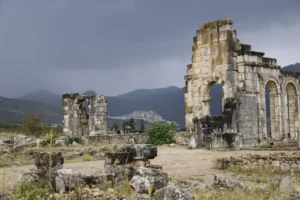
Near Meknes, the ruins of Volubilis show the Roman presence in Morocco, with columns, an arch and well-preserved mosaics set in an open landscape. It is an easy stop between Fes and Chefchaouen and works best in the morning or late afternoon.
Ait Ben Haddou
On the old caravan route between the Sahara and Marrakech, Ait Ben Haddou is a village of red earthen buildings climbing a hillside. It is a UNESCO World Heritage site and has appeared in many films. Walk up through the lanes for a view over the valley, and visit early or late to avoid the crowds.
Chefchaouen
The blue-washed town in the Rif Mountains is a landmark of color rather than a single building. Its lanes, stairways and doors give it a calm, cool atmosphere. It is best enjoyed early in the morning or in the evening, when the streets are quiet.
Erg Chebbi and the Sahara
Near Merzouga, the dunes of Erg Chebbi rise to impressive heights and change color through the day. A camel trek at sunset and a night in a desert camp are among the most memorable experiences in Morocco. Spring and autumn are the most comfortable seasons.
Todra Gorge and Dades Gorge
In the south, towering canyon walls and winding mountain roads create some of the most dramatic scenery in the country. They sit on the road between Ouarzazate and the Sahara and fit naturally into a desert itinerary.
Mount Toubkal and the High Atlas
The High Atlas Mountains cross Morocco from the Atlantic coast toward the east, and Mount Toubkal is the highest peak in North Africa. Even if you do not hike, the mountain roads, villages and valleys are a landmark in their own right, and the Tizi n’Tichka pass is one of the most scenic crossings.
Essaouira’s Ramparts
On the Atlantic coast, the old sea walls and cannons of Essaouira look out over the ocean. They are best at sunset and add a different, more relaxed atmosphere to a trip that is otherwise full of cities and mountains.
How to Combine the Landmarks
You cannot see everything in one trip, so it helps to group the landmarks by region. A week can cover the north, Fes, the Sahara and Marrakech. Two weeks lets you add the coast and slow down. Our 7-day and 13-day itineraries show two ways to link these places in a comfortable order.
Tips From Our Team
- Visit major landmarks early in the day, before the heat and crowds.
- Dress modestly when visiting religious sites and traditional neighborhoods.
- Remember that some mosques are closed to non-Muslims, and respect the rules.
- Hire a licensed guide for complex places such as Fes and Volubilis.
- Keep small dirhams for tips and entrance fees.
Frequently Asked Questions
What is the most famous landmark in Morocco? The Hassan II Mosque, the Koutoubia minaret, Ait Ben Haddou and the Sahara dunes are among the most recognized.
Can non-Muslims visit mosques in Morocco? Most are closed to non-Muslims. The Hassan II Mosque is a well-known exception, with guided visits.
How many days do I need to see the main landmarks? Seven days cover a good selection, and two weeks allow a slower pace.
What is the best time of year to visit? Spring and autumn are the most comfortable for sightseeing.
Ready to plan your trip? Contact our local team to build a private itinerary around the landmarks you most want to see.